Types of SEO: On-Page, Off-Page, and Technical SEO Explained
Search Engine Optimization(SEO) has become one of the most significant digital marketing strategies for small businesses and website owners. Be it a small business, a blog and online store, seo ranks your website on different search engines like google, bing etc when someone searches for the information which is related to your website content.
In simple terms, seo is process of optimising your website to rank higher on search engine result pages (SERPs)
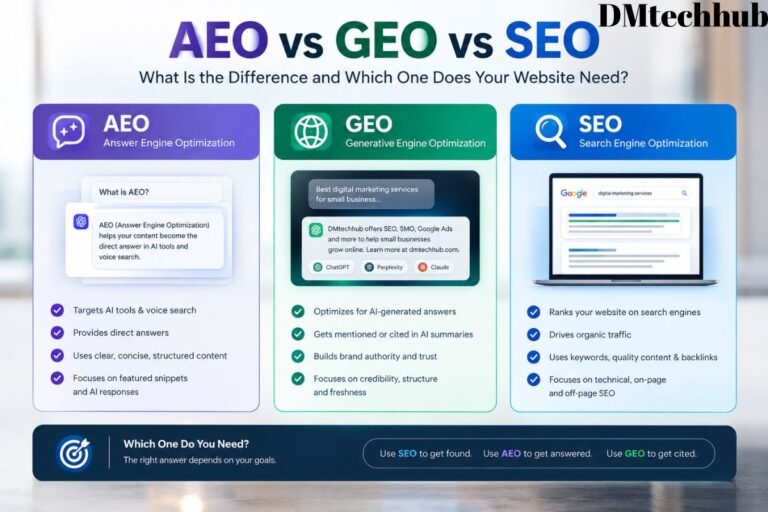
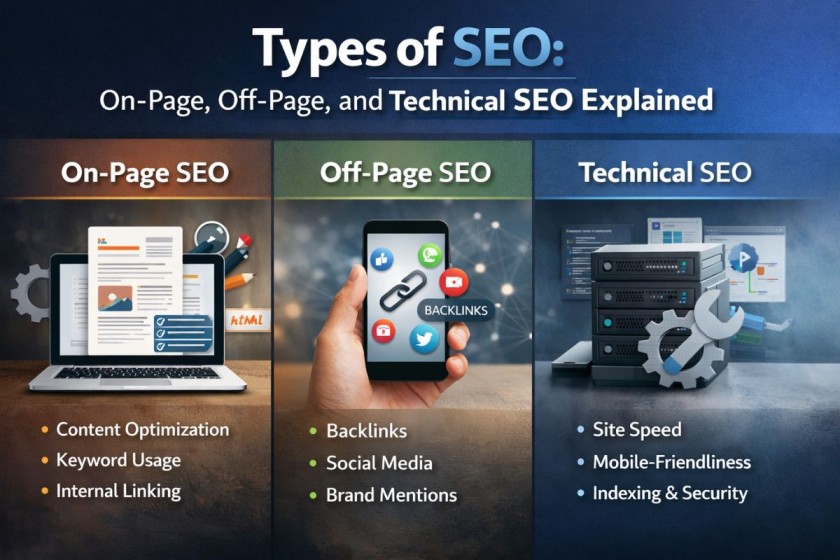
SEO has been divided into three main pillars
- On page seo
- Off page seo
- Technical seo
The above three pillars of seo play a crucial role in ranking your website on SERPs.
What is on page seo?
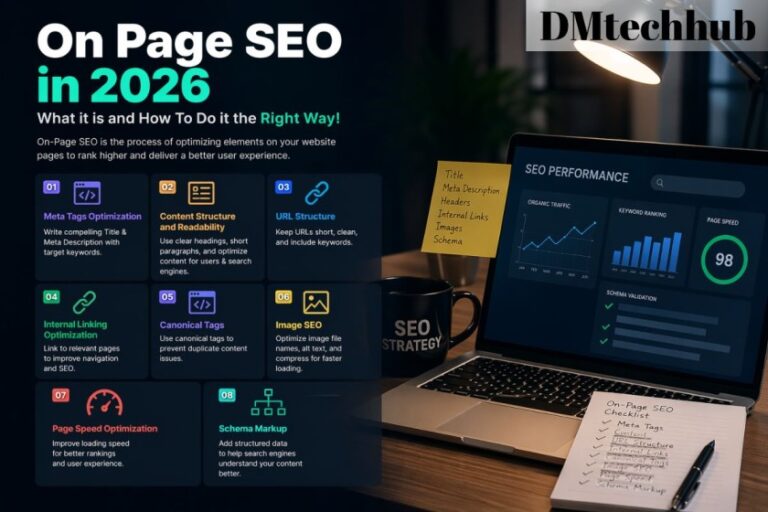
Onpage seo is a process of optimizing different elements of your website such as meta title, meta descriptions, heading tags, image alt text, canonical tags, internal links, website structure so that search engines can easily understand your content and rank it for relevant keywords.
In other words, every action you take on your website is within your control.
Key elements of on page seo
- Keywords Optimization
Keywords are the specific words, phrases and search queries that people type in search engines like google to get relevant information about any product and services.
For example:
“best seo tips for beginners”
Your keyword should include naturally in
- Title tags
- Meta title
- Meta description
- Url slug
- Content
For example: – 15 best seo tips for beginners in 2026
This helps the search engines understand the main topic of your webpage.
- Title tags
Title tags are the clickable blue headlines that appear in search engine result pages. It is a webpage title or page title that help users and search engines understand the webpage content
For example:
“Types of SEO: On-Page, Off-Page, and Technical SEO Explained”
A good title should
- Include the primary keyword
- Be clear and engaging
- Be concise up to 60 characters
- Meta description
A meta description is a short summary of webpage content roughly around 150 to 160 characters that appear below the clickable blue headline in the search engine result page.
Although meta descriptions are directly not a ranking factor, it improves the click through rate of the website.
- Header tags(H1, H2, H3 etc)
These are the HTML elements that are used to structure your website content hierarchy. They tell the main topic(H1) and sub topics(H2-H6) of a website content
Heading tags improve the readability by making content easier for users and search engines like google
For example
- H1 – Blog title
- H2 – What is on page seo
- H3 – Keyword optimization
- Image Optimization
It is the process of optimizing large sized images on your website. If any website has images having size in MBs then those images need to be optimised between 100KB and 150KB and uploaded back to the website for achieving good speed of a website. Optimised images provide a good user experience and are easily understood by search engine crawlers.
What makes good for image optimization
- Use descriptive file names for images
- Alt text should be added to images
- Image size should be compressed or reduced without losing its quality
- Internal Linking
It is a process of linking one webpage to another webpage in a website through a clickable text. It helps search engines crawl, index and understand your website site structure.
Benefits of internal linking
- It improves the crawlability and indexability of your webpages.
- It passes authority from stronger pages to weaker ones
- It also enhances user experience(UX) i.e guiding users to related content helps in reducing bounce rate of the website.
What is off page seo?
Off page seo refers to the action taken by you outside your website. It focuses on building and improving a website’s authority, credibility and trust through different techniques such as backlinks, guest posting, social media links and brand mentions.The most crucial factor in off page seo is backlinks.
Key off page seo techniques
- Backlink Building
It is the cornerstone of off page seo. It is a clickable hyperlinks through which external websites link to your website. Quality backlinks from reputable websites to your website act as “votes of confidence” and help in improving the website’s visibility and search engine rankings. - Guest Posting
Guest posting is the process of creating content or articles on another website to build high quality backlinks, improve rankings on search engines and increase brand authority. If you contribute valuable and relevant posts on another website, you can earn links which enhances the trust and credibility and attracts the referral traffic to your website.
- Social Media Links
Social media links in seo are the clickable links in social media posts, bios and profiles that give referral traffic to your website and often referred as “nofollow”
Although, these social media links boost the authority of your website, increasing content outreach and encouraging the social signals. They drive the traffic and engagement to your website.
- Brand Mentions
It is a significant off page seo technique in which someone mentions the name of your brand on the internet, social media platforms, forums or news articles whether “linked” or “unlinked”.
What is technical seo?
Technical seo is a process of optimising the technical aspects of a website such as creating and updating the xml sitemap, robots.txt, implementing schema markup on website, using canonical tags, robot meta tags, improving website speed and performance, making the website mobile-friendly.
Key Aspects of Technical SEO
- Crawlability and Indexing of urls
Crawlability is a process through which search engines bot discover, access and navigate the website pages while indexability is a process through which Google adds the website pages to its database for display in search results.
- Website speed and Performance
Site speed refers to how quick your website loads and how smoothly users can interact with it. If a website loads quickly then it improves the user experience, reduces the bounce rate and helps search engines crawl and index your pages efficiently.
Google considers page speed a ranking factor. You can optimize your website speed by compressing images, reduce unused CSS/Javascript code in the website, and improve the core web vitals of a website.
- Mobile Friendliness Check
Mobile friendliness refers to how well your website performs on smart phone devices such as mobile phone, tablet. A mobile friendly website automatically shifts its layout, image and text size and navigation so that users can easily read the content without zooming and scrolling on the website.
- HTTPS Security
Https Security ensures the secure connection between user browser and the website server and this connection is protected and encrypted through SSL certificate. Google considers https security a ranking signal and the websites that are using http security are generally considered as insecure since they don’t have ssl certificate, ultimately reducing the trust and affect the search engine rankings of that website.
- Structured Data (Schema Markup)
Structured data is a code snippet added to website source code. Structured data also known as Schema markup added to websites to enhance the appearance of websites in search engine result pages. Schema markup code is used to display rich results on SERPs.
Schema markup helps search engines better understand your page content.
- Canonical tags
It is a snippet of HTML code of your website and present in the head section of HTML code. Canonical tags inform search engines which page version is the main url when the same content is present in different urls and the canonical tag is assigned to the main url to avoid the duplicacy issues of content so that search engines index the main url of your website.
Difference between Onpage, Off page and Technical seo
| SEO Types | Focus Area | Examples |
| On page seo | Optimising different elements of a website | meta title, meta descriptions, internal linking |
| Off page seo | Building website authority and trustworthiness | Backlinks, social media links, guest posts |
| Technical seo | Optimising website infrastructure | Website speed, sitemap, robots.txt file, schema markup |
Final Conclusion
Search Engine Optimization is not just a single activity, it is a mixture of multiple strategies and efforts. Understanding the three basic types of seo is crucial for your website.SEO is a long term strategy if all techniques in seo are implemented correctly, then it can deliver good results for a long time even after we stop the seo of that website.